
Turning good surgeons into great ones
Robotic bariatric surgery is a minimally invasive, robot-assisted weight-loss procedure such as sleeve gastrectomy or gastric bypass. It uses advanced 3D visualization and 360-degree instrument movement for enhanced precision.
It offers benefits like reduced complications, improved accuracy, and faster recovery, although it may involve higher costs compared to traditional techniques.
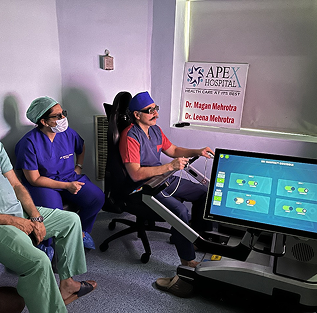


Procedure Types: Used for gastric bypass, sleeve gastrectomy, and revisional bariatric surgeries.
Technique: Surgeon controls robotic arms from a console with highly flexible instruments.
Benefits: Reduced bleeding, fewer infections, and shorter hospital stay.
Disadvantages: Higher cost compared to conventional laparoscopy.
Recovery: Hospital stay of 1–2 days with gradual dietary and lifestyle changes.
Robotic Sleeve Gastrectomy: Stomach is reduced to a sleeve shape by removing excess portion.
Robotic Gastric Bypass: Small stomach pouch connected to intestine to reduce intake and absorption.
Revisional Surgery: Used for complex redo surgeries with higher precision and fewer complications.
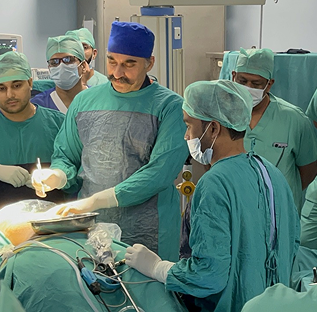
Staple line leaks
Dumping syndrome
Nutritional deficiencies
Infection or bleeding
The choice between robotic and laparoscopic surgery should be discussed with your surgeon based on individual health conditions.
ME Surgery ©2025 | All rights reserved
 +91 7599690560
 +91 7500757444
 www.mesurgery.com