Turning good surgeons into great ones
The types of surgery available for treating hernias are:

Laparoscopic surgery (also known as Minimal Access Surgery / Minimally Invasive Surgery / Endoscopic Surgery) also known as Inguinal hernia surgery, incisional hernia surgery or laparoscopic hernia surgery.
Conventional (Open) Surgery
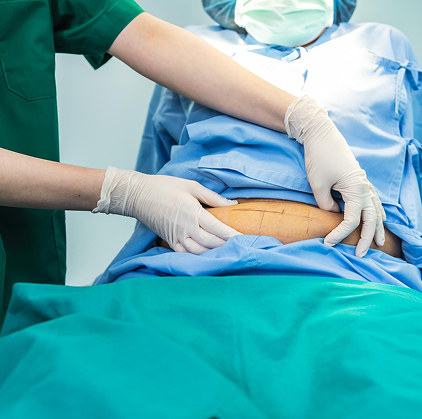
After the Hernia operation you will be kept in the recovery room. This period may vary from a few minutes to a few hours. The anaesthetist decides about your shifting to room. The decision depends on many technical factors.
You will be sleepy immediately after the operation due to sedation given during anaesthesia and during the recovery period.
You may have some discomfort when coming out of the effect of sedation. It gradually reduces to a tolerable level within a few minutes without any pain killer. However, if necessary you may ask for pain killer injections/tablets. You should try to avoid these drugs because they produce drowsiness and you may sleep for a longer period which is not desirable.
You are generally allowed to have sips of water immediately after the operation and liquids on the day of operation. In case of vomiting the liquid intake may be stopped and restarted after 30 minutes. The liquids may include water / cold drinks / tea / coffee / milk / juices or some clear soups.
You are allowed to have normal home cooked meals of your choice from the next morning at breakfast.
One to two weeks before the operation you will be required to follow a low calorie liquid diet. This will help shrink the liver and make the operation easier for the surgeon and safer for you.
You should try to move the limbs and can sit up immediately after operation. You should also go to the toilet on your own. There are no restrictions whatsoever for physical movement. In fact the majority of the patients will feel much better after they have started the movement. The pain also dramatically reduces once you start sitting up, moving and walking.
There is no restriction on your physical activity. You are allowed to walk as soon as you recover from your sleep. There is no restriction on climbing stairs, lifting weight etc. You may even drive two wheelers or a car as soon as you feel fit. This in fact is one of the major advantages of the laparoscopic procedure.
You will be discharged on the same day or next day of operation unless there are some associated medical/social problems. You are advised to visit again for follow up after 2-5 days when the dressings are removed. You should avoid wetting the dressings unless they are waterproof. After the removal of dressing, you can have a normal bath with soap and water.
In very few cases there may be some bloody/whitish discharge from the wound in the post-operative period. This should not bother you because it is generally harmless. You can wipe the discharge and apply band-aid so as to avoid staining the clothes. If it is more you should report to the surgeon during the next visit. Please feel free to ask any question that may come to your mind.
Incisional Hernia Surgery is done with the help of general anesthesia. The Incisional Hernia Surgery is generally performed with the help of Laparoscopic Surgery method, using small incisions in place of the traditional large incisions. This surgery is generally performed by a colon rectal specialist or a general surgeon.
We wish you a speedy recovery…
This is not a substitute for medical advice. In case of a query, please contact your Doctor.
ME Surgery ©2025 | All rights reserved
 +91 7599690560
 +91 7500757444
 www.mesurgery.com