Turning good surgeons into great ones
Turning good surgeons into great ones
Inability to have children is infertility after one year of regular unprotected coitus. Either Male or Female or both factors may be responsible for Infertility. About 15% of couples suffer from infertility. In a country like ours, infertility is not only a medical problem but a social one too. Today, advances in reproductive medicine have helped many couples become parents with Assisted Reproductive Techniques (ART). In July, 1978, Louise Brown, the world’s first baby was born by In-vitro Fertilization Technique (IVF). It changed the management of infertile couples and brought hope and happiness to many childless couples. The problem of male infertility was conquered in 1992, with the world’s first baby being born with Intra-cytoplasmic Sperm injection (ICSI).
There are many different ways in which fertility treatment can be offered to patients and today with advances in ART, almost 80% of the patients can be helped with some form of Assisted Reproduction.
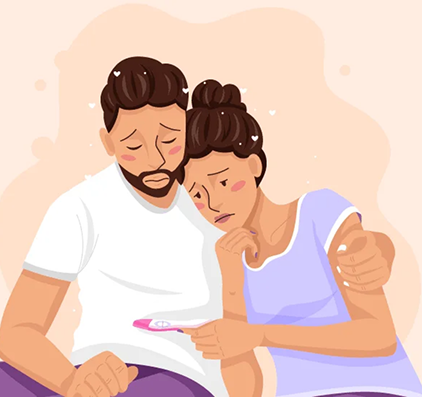

In approximately 40% of the couples, male factor is the sole contributory cause of infertility. Hence a proper semen analysis is very important.Extended sperm function tests may be needed depending on the initial evaluation. A Testicular Biopsy may be needed in cases of azoospermia. Today, in cases of obstructive azoospermia, sperm can be retrieved directly from the testes and pregnancies achieved with ICSI using PESA or TESA sperms.
Approximately 40 % of patients are infertile due to female factors. The common causes of female factor infertility will need tests for proper evaluation. Hormonal profile, uterine and tubal factor evaluation, Monitoring of a natural cycle for ovulation and ultrasonography for checking for other pelvic pathology along with basic routine hematology tests are needed for the evaluation of female factors.

Semen analysis and culture
Routine basic hematology
Testicular biopsy if Azoospermia
Routine basic hematology
Baseline hormonal evaluation on day 2/3 of period
Natural Cycle Follicular monitoring by TVS
Hysterosalpingography (HSG) or Hysteroscopy with laparoscopy and chromopertubation for uterine and tubal testing
Ultrasound of the pelvis (USG): This is done to evaluate and identify any abnormality in the pelvis. In certain cases we may also need 3-D USG
Ovulation Induction
Ovulation induction with Intra-Uterine Insemination (IUI)
Donor insemination
In-vitro Fertilization (IVF)
IVF with Intra-Cytoplasmic Sperm Injection (ICSI)
IVF with ICSI with Surgical Sperm retrieval (TESA or PESA)
IVF with Ovum Donation
IVF with Embryo Donation
IVF with surrogacy
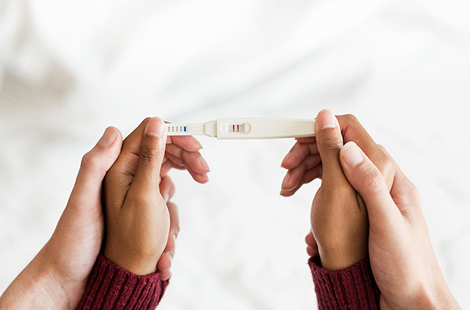

What is in vitro fertilization (IVF)?
For many couples who have exhausted traditional clinical and surgical treatments for infertility, Assisted Reproductive technologies (ART) may offer the best hope for pregnancy. Through these procedures, women with otherwise untreatable infertility have given birth to healthy babies. IVF or In-vitro Fertilization means fertilization outside the body.In ICSI (Intra Cytoplasmic Sperm Injection), the sperm is directly injected into the egg.
Endometriosis
Low sperm count or motility
Absent sperm count due to obstruction
Unexplained infertility
Advanced age
Poor ovarian reserve
Patients who want to become pregnant by the procedure of egg donation
Patients who want to become pregnant by the procedure of embryo donation
Patients who need surrogacy services for achieving pregnancy
Often husbands of patients undergoing treatment cycles may not be around at the time of the IVF treatment (due to the nature of their jobs eg:expats, staying and coming from abroad, sailors etc). In these cases the sperms are obtained earlier and frozen sperms are used for the fertilization procedure. Occasionally, in cases of male factor infertility, donor sperm is required and this can also be provided from a registered sperm bank.
Most ART centers will offer a comprehensive donor egg program. There are many circumstances where the female partner is unable to produce eggs or the egg quality is very poor. These patients can qualify for egg donor –recipient program.In egg donation, eggs are borrowed from a young woman (less than 31 yrs of age) called the donor, with her consent. These eggs are then fertilized with the sperms of the husband of the recipient woman and the resultant embryo is inserted into the womb of the recipient. The success rate of this procedure is in the region of 30 to 40%.
In cases of azoospermia it is important to evaluate if there is sperm production in the testes and if present, we can use these sperms by the technique of PESA (Percutaneous Epididymal Sperm Aspiration) or TESA (Testicular Sperm Aspiration). Hence, it is important that the testicular biopsy must be done at the unit where ART services are available so that if present the sperm can be frozen immediately for use in a later cycle.
There are only two main side-effects of IVF-ICSI treatment and they are both temporary.
Ovarian Hyperstimulation Syndrome(OHSS): This is usually seen in patients with Polycystic ovaries and is due to hormonal stimulation. It occurs in about 0.5-2% of cases. The management is mainly by prevention. This is achieved by using low dose stimulation protocols. If it still occurs, the management is intensive monitoring and adequate hydration. In some cases, ascetic fluid tapping may be needed.
Multiple Pregnancies: Currently the rate of multiple pregnancy is about 20-25%. Most of them are twins, but some are high order multiples such as triplets and quadruplets. This also occurs due to multiple embryo transfers. We have now started decreasing the number of embryos transferred to 2. With improving laboratory conditions and better culture systems, we are hopeful that we will soon transfer only one embryo and hence be able to decrease this incidence to less than 5%
Most ART units should be able to offer success rates of about 40% in young patients. Average success rates are between 30-40% depending on the age of the patients, the cause of infertility and presence of other pelvic pathology.
With the availability of Assisted Reproduction in the form of IVF / ICSI many couples are able to achieve pregnancy and fulfill their dream of parenthood. It is a true miracle of medical science to see couples get pregnancies and see these babies grow. Since 1978, 3 million babies have been born with ART and the number is only increasing.
ME Surgery ©2025 | All rights reserved
 +91 7599690560
 +91 7500757444
 www.mesurgery.com